
How to Clean a Cold Press Oil Machine After Every Use
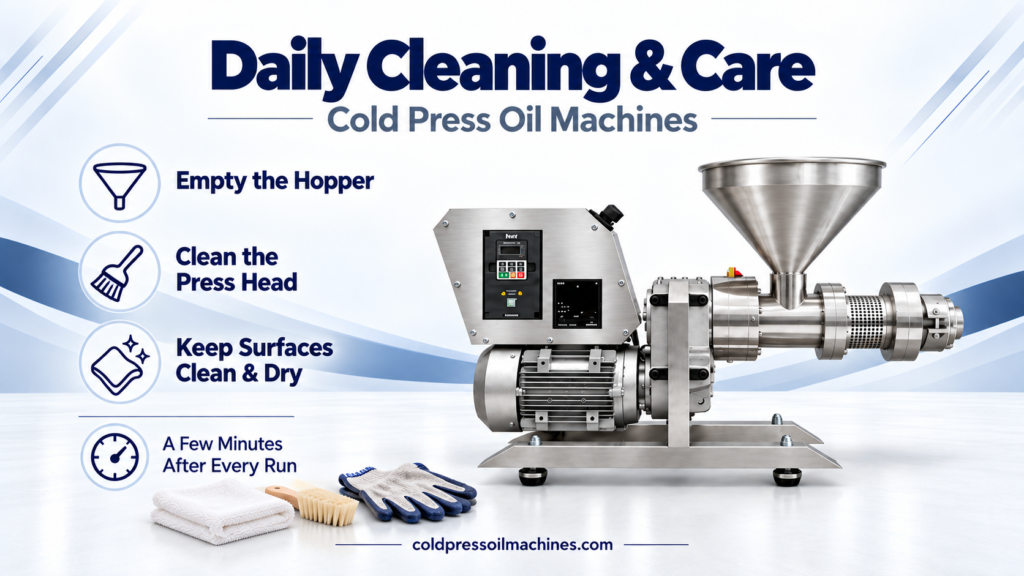
Daily Cleaning After Every Cold Press Oil Production Run
Daily cleaning is one of the simplest habits that helps a cold press oil machine start easier, stay cleaner and operate more consistently. The best time to clean the press is immediately after production, while remaining seed cake is still warm and easy to remove.
Daily cleaning does not need to be a long maintenance procedure. In most cases, a few minutes are enough when the machine is cleaned immediately after pressing.
The reason is simple. Residue from black seed, sesame, sunflower, flaxseed, pumpkin seed, grape seed, coconut, castor and other oil-bearing materials can harden inside the press head and nozzle if the machine is left for too long.
Once the residue becomes hard, cleaning takes longer and the next startup may also become more difficult. For this reason, we recommend treating daily cleaning as a normal part of every production cycle.
Best Time to Clean
Clean the machine as soon as production is finished. Warm, soft press cake is much easier to remove than residue that has cooled and hardened overnight.
1. Stop the Machine Completely
Stop the machine from the control panel and wait until the motor and screw have completely stopped. Never begin cleaning while the screw is still rotating.
2. Disconnect the Electrical Supply
After the machine has stopped, disconnect the power supply or switch off the main electrical connection. This simple step prevents accidental startup while cleaning or removing parts.
3. Empty and Wipe the Hopper
Check whether any seeds or kernels remain in the hopper. Remove the remaining raw material and wipe the hopper with a clean, dry cloth.
Leaving raw material in the hopper for long periods is unnecessary and can create hygiene or moisture problems before the next production run.
4. Remove and Clean the Nozzle
The nozzle is one of the most important areas in daily cleaning because compressed press cake collects around the outlet during production.
Remove the nozzle and clean the residue inside it. A small brush or a suitable hand tool can be used when needed. The goal is to leave the outlet clear for the next startup.
5. Clean the Press Head
After removing the nozzle, clean the press-head area where the highest amount of cake residue normally remains. A small amount of residue after production is normal, but it should not be left inside the machine.
On machines supplied with the special multi-function wrench, the press head can be loosened in the marked OPEN direction. A few controlled, medium-force taps are normally enough when cleaning begins shortly after production.
If the Press Head Has Become Difficult to Open
If the machine has been left to cool and the residue has hardened, reheat the press-head area. In the original cleaning procedure, approximately 100°C for around 20 minutes is used to soften hardened product residue before trying again.
After reheating, remove the heater ring carefully if required by the machine design and try again using controlled, medium-force taps in the OPEN direction. This method helps avoid unnecessary damage to the press components.
Cleaning Inside the Head
Once the press head is open, remove the remaining seed cake carefully. A suitable flat tool may be used for compacted residue, provided the metal surfaces are not damaged.
If compressed air is available in the workshop, it can be useful for removing small particles from internal areas. The purpose is simply to remove residue, not to strike or scrape the metal aggressively.
6. Check the Oil-Flow Holes
The small openings where oil leaves the press section should remain clear. Cake particles or sediment can reduce oil flow when these holes become blocked.
Inspect the openings during cleaning and remove residue carefully without damaging their shape. A suitable thin cleaning tool or compressed air can be useful where appropriate.
7. Wipe the External Surfaces
Oil, seed dust and small particles can collect on the outside of the machine during production. Wipe the stainless-steel surfaces using a clean, dry microfiber cloth.
Keeping the external surfaces clean improves hygiene and also makes routine inspection easier.
8. Daily Cleaning Usually Does Not Need Chemicals
For the daily cleaning method described here, the main goal is to remove seed cake and oil residue mechanically, then leave the relevant parts clean and dry.
In many normal daily-cleaning situations, aggressive chemical cleaners are unnecessary. Remove the residue, wipe the accessible parts with a clean microfiber cloth and use compressed air where appropriate.
If your facility follows a specific food-safety or sanitation protocol, follow those requirements in addition to the machine's operating instructions.
9. Make Sure the Parts Are Dry
After cleaning, make sure the nozzle, press head and accessible food-contact parts are dry before leaving the machine idle.
Compressed air can also help remove small particles and residual moisture from difficult-to-reach areas.
10. Leave the Machine Ready for the Next Production
Once cleaning is complete, leave the machine in a clean and organized condition for the next run.
- The hopper should be empty.
- The press-head area should be clean.
- The nozzle should be clean and correctly reinstalled.
- The oil-flow holes should be open.
- External surfaces should be clean and dry.
This small routine makes the next production startup much easier.
How Long Does Daily Cleaning Take?
When cleaning starts immediately after production, it normally takes only a few minutes. The exact time depends on the machine, raw material and production duration.
Waiting until the next day usually makes the job harder because the remaining press cake can cool, dry and harden inside the outlet area.
The Most Common Mistake
The most common mistake is simple: finishing production and leaving the machine dirty until later.
“I will clean it tomorrow” can turn a short daily task into a longer cleaning job. Hardened residue can also make the next startup more difficult and affect cake discharge.
A Few Minutes Today Can Save Much More Time Tomorrow
Regular cleaning helps keep startup easier, oil-flow openings clear and the pressing system ready for the next production run.
Daily Cleaning Checklist
- Stop the machine.
- Disconnect the electrical supply.
- Empty and wipe the hopper.
- Remove and clean the nozzle.
- Clean the press head and remaining cake.
- Check the oil-flow holes.
- Wipe external surfaces.
- Dry the cleaned parts.
- Reassemble the machine for the next production run.
Conclusion
Daily cleaning of a cold press oil machine is not difficult, but it should be consistent. The most important habit is to clean the press immediately after production before the remaining seed cake has time to harden.
In our experience, machines that are cleaned regularly are easier to start, easier to inspect and more consistent in daily production. A few minutes of cleaning after each use can prevent much more work later.
Need Help With Cleaning or Daily Operation?
Tell us your machine model and the raw material you are processing. If needed, send photos or a short video of the press head and outlet area so our technical team can review the situation.
View Oil Press Machines Contact Us WhatsAppcold press oil machine cleaning daily maintenance machine care oil press cleaning oilseed pressing screw press maintenance
