
10 Common Mistakes in Cold Press Oil Production
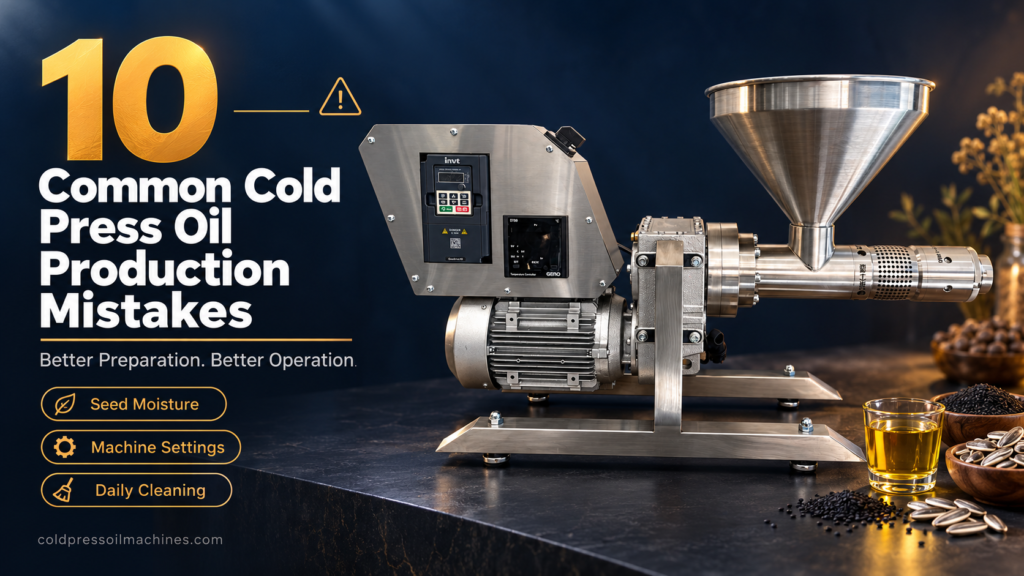
10 Common Mistakes in Cold Press Oil Production
Cold press oil production looks simple from the outside: prepare the seeds, start the machine and collect the oil. The basic principle really is simple. But small mistakes in raw-material preparation and machine settings can make a noticeable difference in daily production.
Over the years, we have seen the same mistakes repeated with very different raw materials and in very different countries. The details change from seed to seed, but the general pattern is often similar.
This guide covers ten of the most common mistakes we see when pressing black seed, sesame, sunflower, flaxseed, pumpkin seed, safflower, hemp, grape seed, coconut, castor and other oil-bearing materials.
1. Not Checking Raw-Material Moisture
This is one of the biggest mistakes. Many users look at the machine first, even when the actual problem comes from the seed.
Raw material with excessive moisture can be more difficult to press. Oil flow may decrease and the press cake may come out softer than expected.
Before changing machine settings repeatedly, check whether the seed has been properly dried and stored.
2. Using Raw Material That Has Been Overheated
Drying and roasting are not the same thing. Some seeds may benefit from controlled heat treatment, while others can be pressed without roasting.
The mistake is applying more heat than necessary. A seed can appear dry on the outside while its internal structure has already been affected by excessive temperature.
If heat treatment is part of your process, keep it controlled and suitable for the material you are pressing.
3. Skipping Press-Head Preheating
Some users want to save a few minutes and begin production immediately. This can make startup more difficult.
Preheating prepares the press-head and cake-outlet area. It is not intended to heat the seeds in the hopper. A properly prepared head usually helps the first cake leave the machine more smoothly.
4. Starting Immediately With the Smallest Nozzle
More resistance does not automatically mean better production.
A common mistake is to install the smallest nozzle immediately in an attempt to create maximum compression. It is usually better to let the machine begin pressing, observe the oil flow and cake structure, and then adjust the outlet gradually.
5. Never Adjusting Motor Speed
Different raw materials behave differently inside the press. Sesame does not behave exactly like black seed. Sunflower does not behave exactly like grape seed or coconut.
Even two batches of the same seed can behave differently because of moisture, storage or crop conditions. The operator should watch the process and adjust motor speed when necessary.
6. Not Watching Oil Flow and Press Cake
A running motor does not automatically mean that the process is optimal.
The operator should regularly look at what the machine is producing:
Is the oil flow stable? Has the oil flow decreased? Is the press cake firm or unusually soft? Is the cake leaving the machine consistently?
These observations provide useful information about whether the current settings and raw material are working well together.
7. Delaying Daily Cleaning
Cleaning should be done when production ends, not the next day.
Remaining seed cake can harden in the nozzle and press-head area as the machine cools. What takes a few minutes immediately after production can become a much longer job after the residue hardens.
A simple daily cleaning routine makes the next startup easier and helps keep the oil-flow openings clear.
8. Blaming the Machine for Every Low-Yield Result
This may sound direct, but it is important.
Oil yield is not determined by the press alone. Raw-material quality, moisture, natural oil content, preparation, storage and operator settings all affect the result.
If the machine is mechanically operating normally, review the complete process before assuming there is a machine fault.
9. Constantly Changing Seeds or Suppliers During the Learning Stage
New operators often want to test everything at once. One day black seed, the next day sesame, then sunflower, then a completely different supplier.
This can make learning harder because every change introduces a new variable.
A better approach is to begin with one consistent raw material, understand how it behaves, find stable settings and then move on to other seeds.
10. Expecting Perfect Results From the First Production Run
This may be the most common mistake of all.
Cold pressing is not complicated, but there is still a learning curve. The first run may show you that a different nozzle is better. The second run may show that motor speed should change. After several runs, the operator begins to understand both the seed and the machine much better.
Good production usually comes from small improvements rather than one dramatic adjustment.
Conclusion
Cold press oil production is not a complicated process, but details matter.
In our experience, successful producers do not rely on one “magic” machine setting. They pay attention to the raw material, operate the press correctly, clean it regularly and allow themselves time to learn how each seed behaves.
Most problems become easier to solve when you look at the complete process: the right raw material, the right preparation, the right machine settings and a little experience.
Having Trouble With Your Cold Press Oil Production?
Tell us which raw material you are processing, your machine model and what you observe in the oil flow and press cake. We can help you review the basic process conditions.
View Oil Press Machines Contact Us WhatsAppcold press oil production motor speed nozzle selection oil press cleaning oil pressing mistakes seed moisture
